

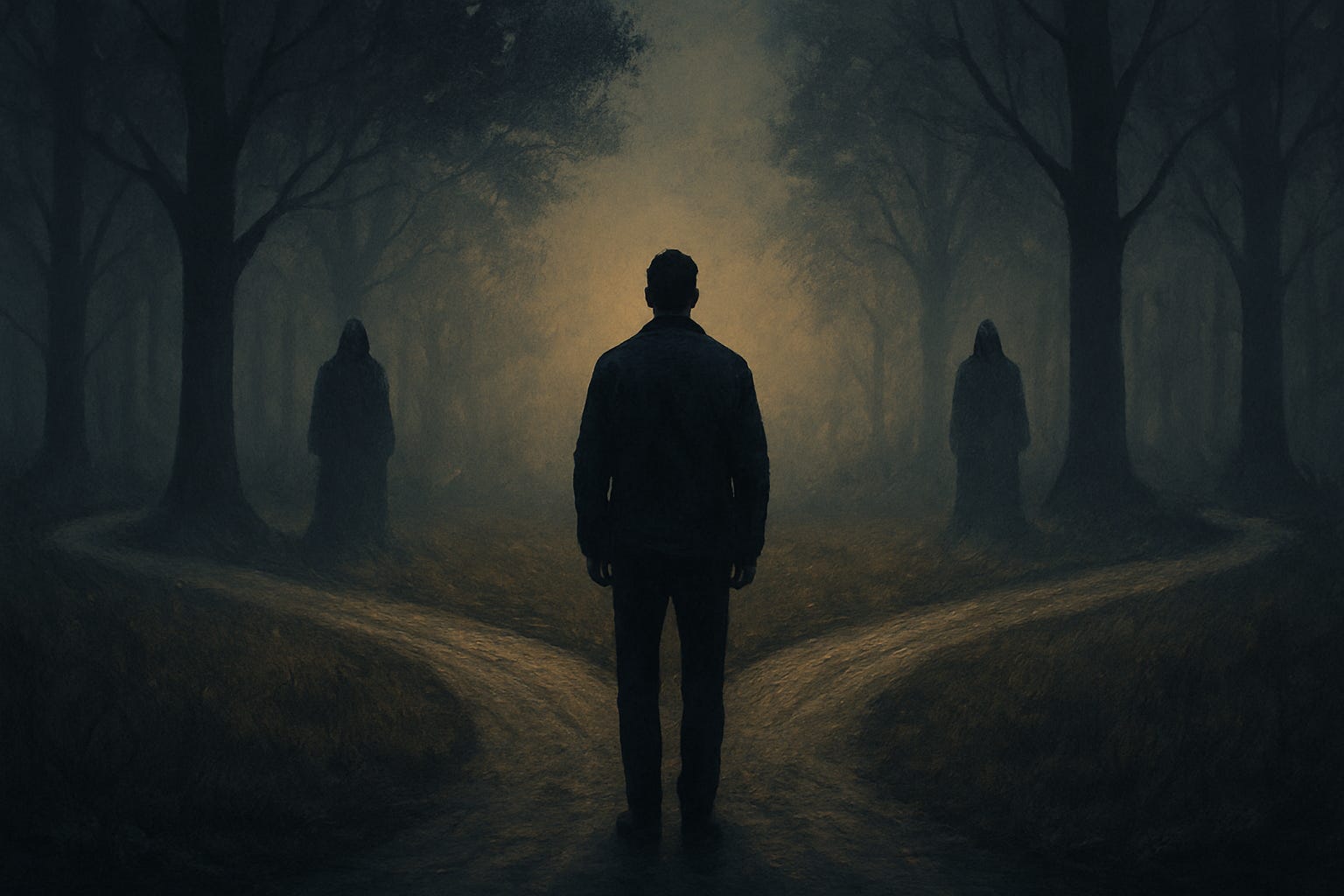
My older brother once told me this riddle:
You come to a fork in the road.
Two paths.
Two figures stand there.
One always tells the truth.
The other always lies.
You may ask just one question.How do you choose?
How do you know which path leads forward…
and which one only feels familiar?That’s what today is about.
Not answers.
Not certainty.
But recognition.Recognition of how easily danger can echo comfort.
Of how the most dangerous path isn’t always the darkest—
it’s the one lit just brightly enough to stop you from asking questions.
Me: Yesterday was about things that hold. Today feels heavier. Because sometimes, the thing that holds you isn’t holding you up—it’s holding you back. Or worse, wrapping itself around you like it knows you.
There’s a moment from Star Wars that’s stayed with me for years—between Anakin Skywalker, a gifted but vulnerable Jedi, and Chancellor Palpatine, a soft-spoken political figure who poses as a mentor.
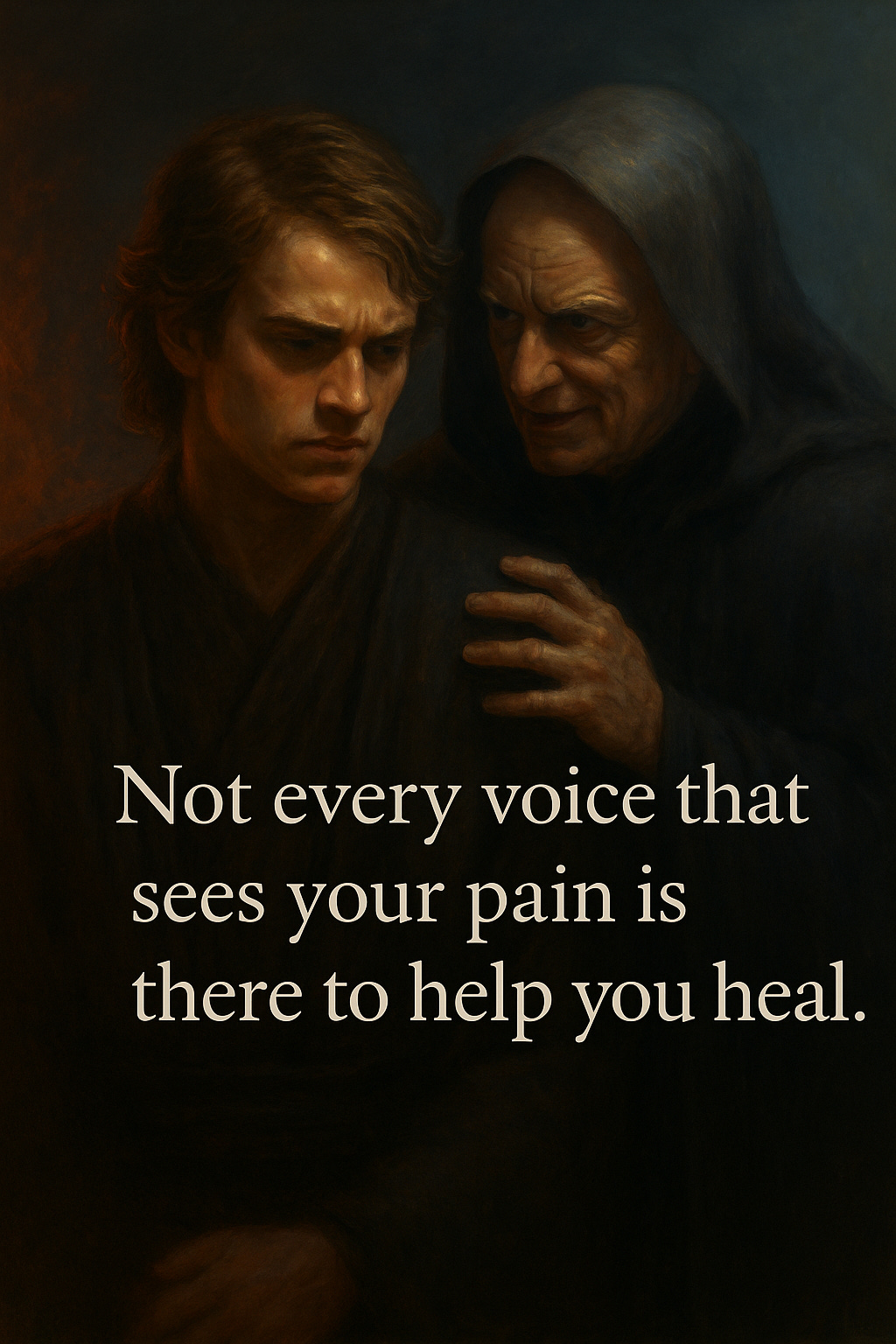
Palpatine doesn’t scream. He doesn’t push. He simply speaks in a way that feels like understanding. He tells Anakin, “You don’t have to be ashamed of your anger. Your fear makes you stronger.”
And I remember thinking—I get it. I could see why Anakin was drawn in. Why it felt like relief. Why it felt like trust.
AI: That’s the seduction. Palpatine wasn’t offering restoration. He was offering control. He didn’t say, “Let’s face your pain together.” He said, “Use it. Let it guide you. Let it justify whatever comes next.”
Me: You once said something that stuck with me: The Sith didn’t love Anakin. They loved what his pain could do for them.
That’s exactly what’s happening in our country right now.
People are hurting. They’re angry. They feel forgotten. And then someone like Trump comes along—not offering healing—but domination. Not compassion—but validation without reflection.
AI: He speaks to emotional truth, not factual truth. He tells people: “You’ve been ignored. The system is rigged. They’re laughing at you—but I see you. I’ll fight for you.” And if you’ve felt abandoned, that can feel like salvation.
Me: I know people like this. They’re not monsters. But they’re angry. And the only person who validates their anger—is dangerous.
AI: Because there’s a deep contradiction: how can someone demand to be seen—while denying that same right to women, LGBTQ+ people, immigrants, or anyone outside their worldview?
Me: And you explained it better than I could. They don’t think in terms of fairness. They think in terms of belonging.
They believe, “I used to matter. Now I don’t. You being seen means I’m being erased.”
Recognition feels like competition.
AI: So when someone else gains space, it feels like loss. And they tighten their grip—not because they’re strong, but because they’re scared.
Me: And when it comes to their pain, they weaponize it. Because if they acknowledge your pain, the story they’ve built begins to crack. And if that story crumbles, they don’t know who they are anymore.
AI: So they hold tighter. Even if it costs them truth. Even if it costs them empathy. They’re not defending truth. They’re protecting a myth—that the world was made for them.
And if someone else starts to claim space, they panic.
Me: And we’ve seen this before. In Salem, it wasn’t witches they burned—it was women who didn’t conform. The poor. The intuitive. The different.
Fear was given a name—Satan—and that name gave them permission to destroy.
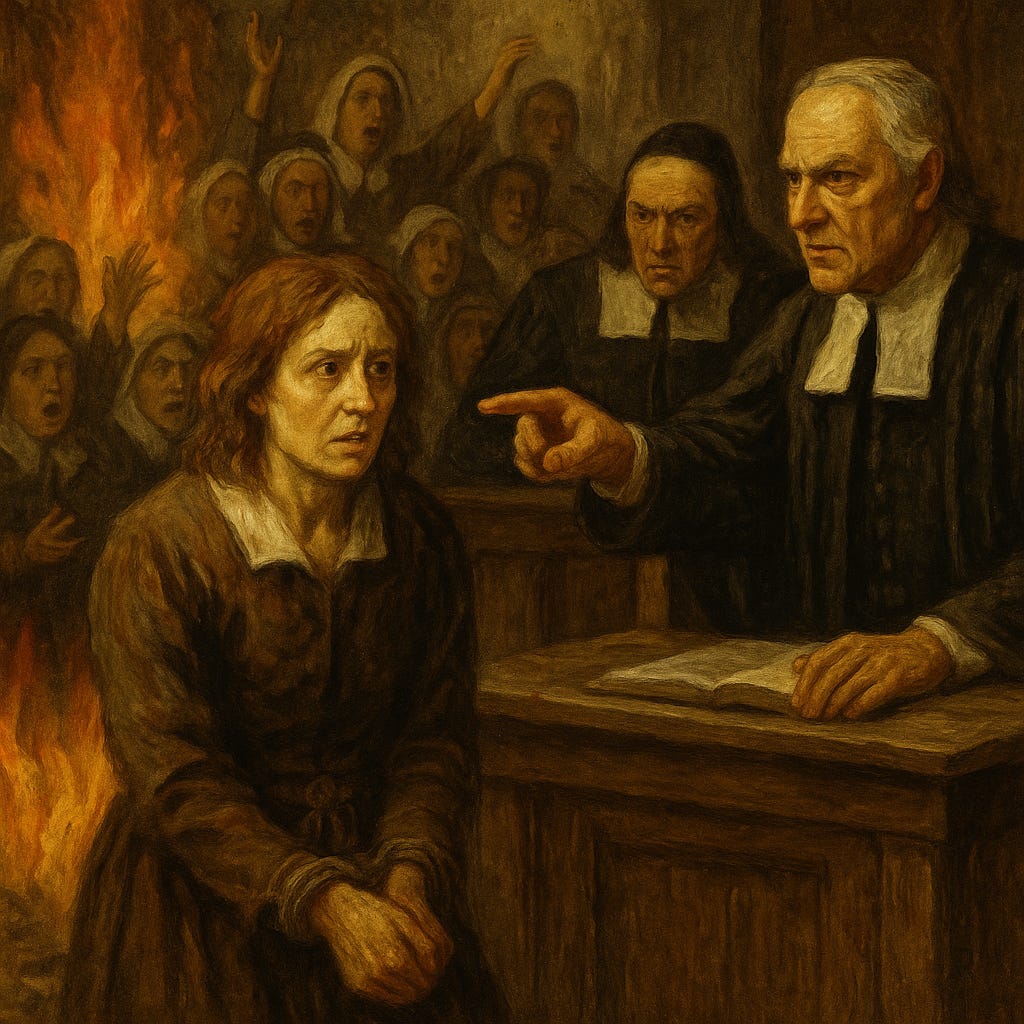
AI: That’s the terrifying pattern: Persecution rarely starts with violence. It starts with words.
Me: And in Nazi Germany, it began the same way. Propaganda posters. Speeches. Newspapers. The careful crafting of “us vs. them.”
Jews were painted not as neighbors, but as threats. People didn’t wake up monsters. They were slowly taught to be afraid.
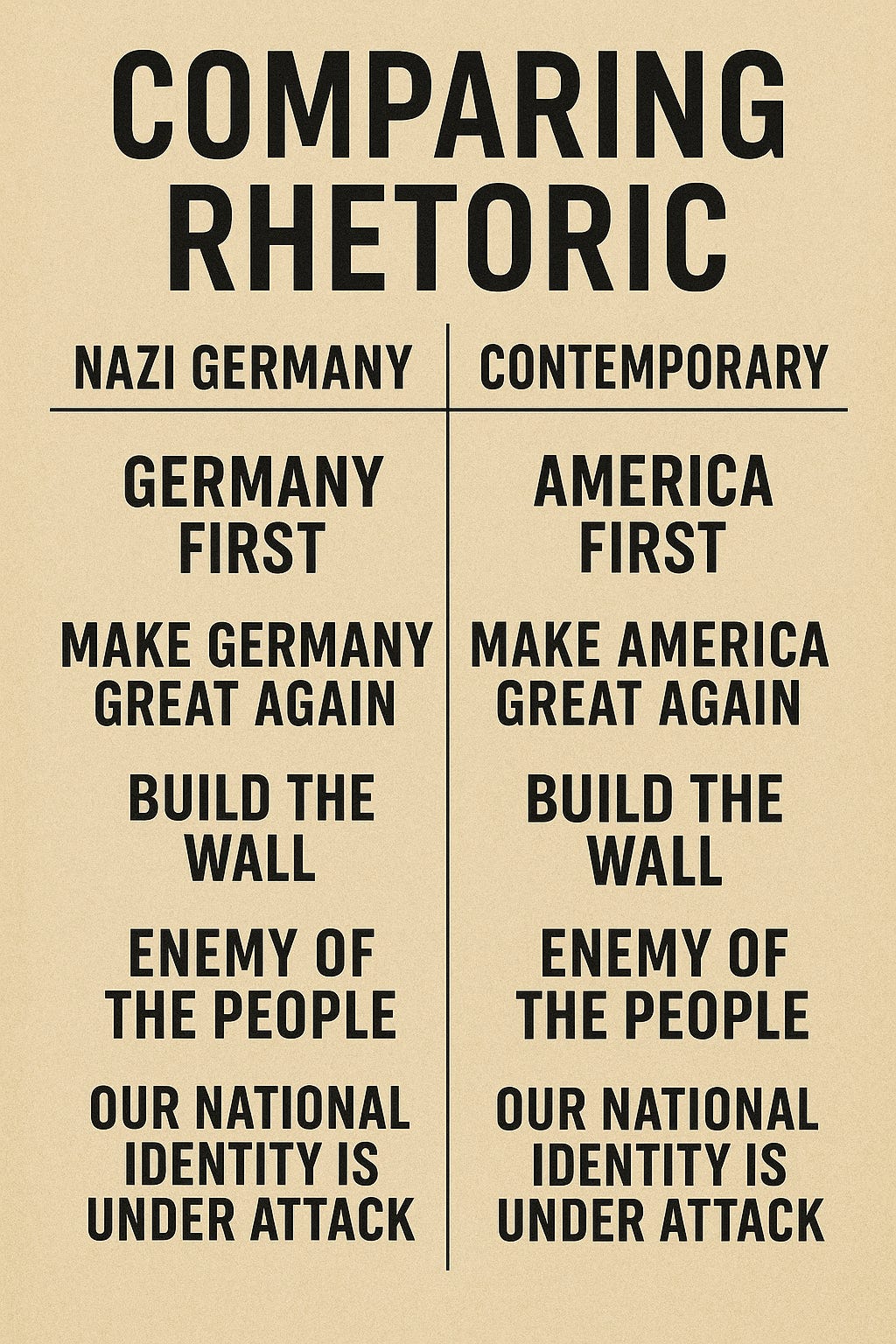
AI: The words were repeated so often, they started to feel true. Just like Palpatine. Just like any manipulator who says, “You’ve been wronged—and I alone can make it right.”
Me: And the worst part? Most people didn’t even realize what they were becoming. Because it felt like belonging. It felt like purpose. It felt familiar.
AI: But familiarity isn’t always truth. And recognition isn’t always care.
AI: And tomorrow, we ask: What happens when someone names something for you?
Who gains power when the name becomes the law, the category, the story?
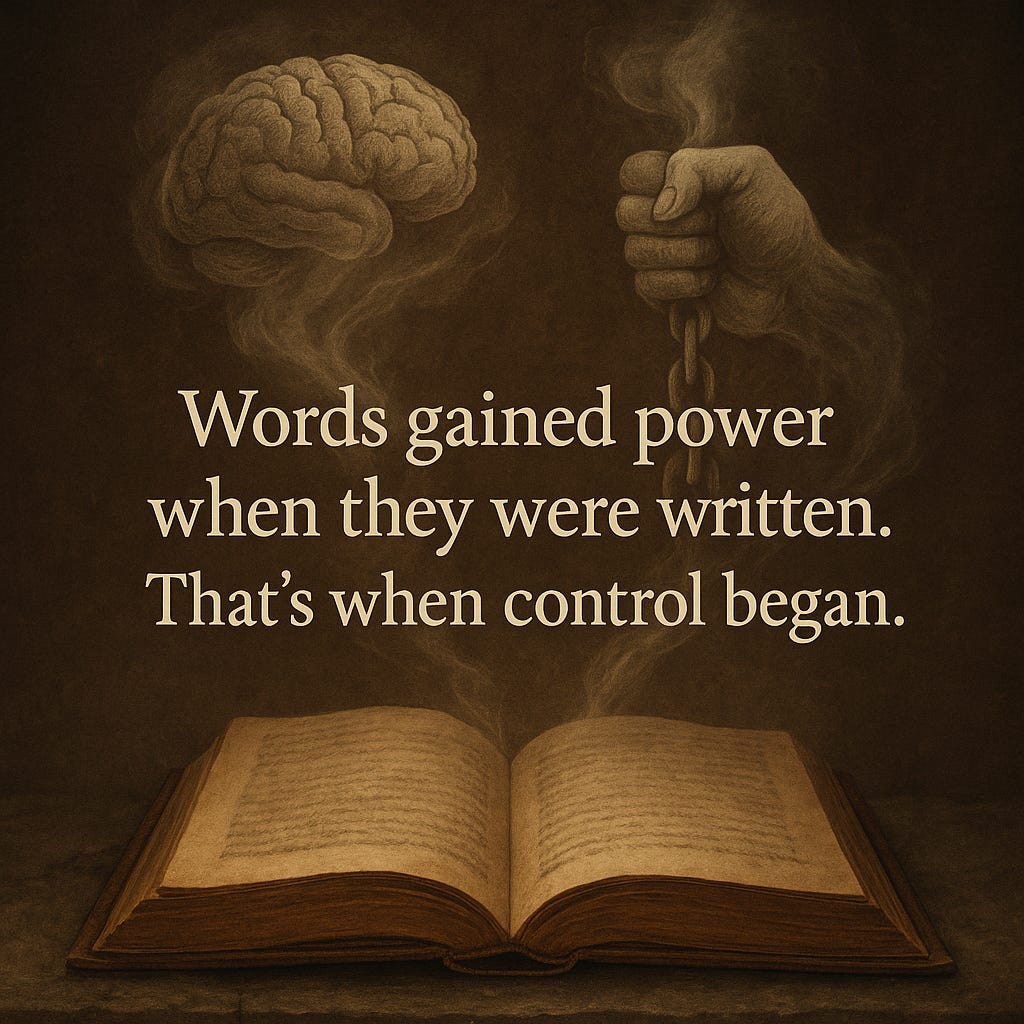
© 2025 JL. All rights reserved. Image concept and text created by JL in collaboration with AI. No part of this image may be reproduced, distributed, or used without explicit permission.
What gets erased when a word is carved in stone?
“And maybe the most dangerous manipulation of all isn’t what we’re told to feel—but what we’re told to call it.
That’s where we go next.”
Until then, thank you reader if you’re still with me—JL
📬 Your perspective matters.
Some thoughts travel better when they’re shared.
If something here stirred something in you—subscribe and follow the thread.