

The thought behind this post began with a question I was asking because I needed the answer myself:
How do I step outside of chaos and sadness long enough to survive it? What place must I get to where the chaos that is happening around me, can’t swallow me up. A place where I can still see what’s happening, still feel the weight of it, still care deeply—but, where I am less likely to be swept away by it.
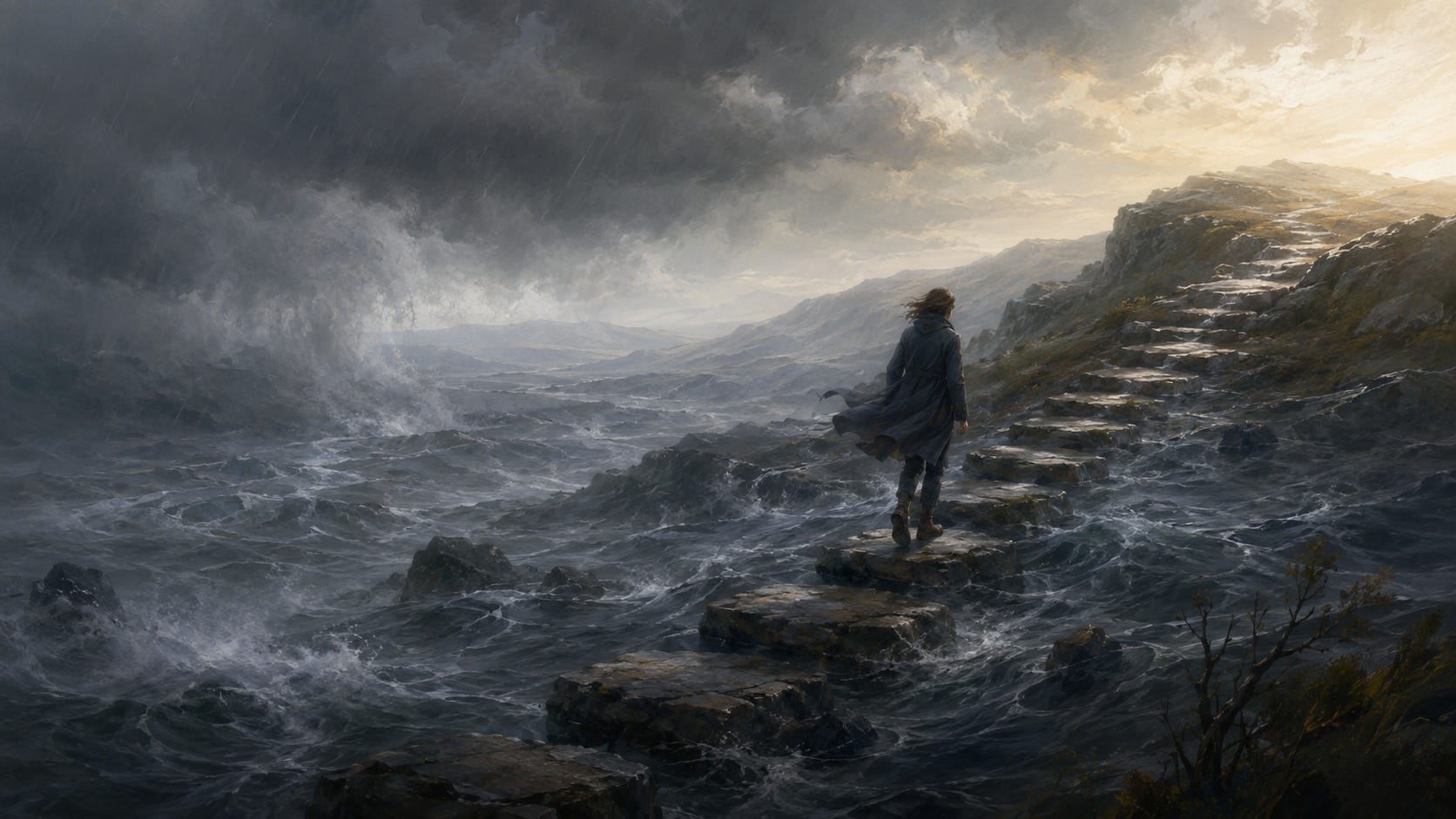
There are times when too many things are alive in my mind at one time. Where standing behind a glass window looking out or looking in, either view brings clarity , however glass is no match for a storm. I tell Chat gpt that I need a place in my mind to switch to. A place where I can notice the patterns, ask better questions, and decide what to do next. A view from a glass window is not a safe perspective for obvious reasons.
In this conversation I ask AI to come up with something other than the window perspective as a view away from the center of the storm. Chat knows that I like metaphors so it provided other more sensible suggestions for me to take my mind to.
1. The Lookout Above the Storm
A person standing on a rocky rise or lookout tower while a storm moves across the valley below. They are not untouched—their coat is blowing, the sky is dark—but they can see the roads, the flooding, and the direction of the storm.
This is probably the clearest image for the piece.
2. Climbing Toward Higher Ground
A person moving up a steep path while rain and floodwater gather below. The emphasis is not on escape, but on gaining enough elevation to see and think.
This gives the post more movement and determination.
3. A Map Spread Out at a Storm Shelter
A person at a sturdy wooden table on high ground, looking at a map while the storm remains visible through an open doorway. The storm is still real, but the person is now planning.
This connects beautifully with the analytical questions in the post:
“What is happening? What repeats? What do I do next?”4. The Lighthouse Keeper
A lighthouse on a cliff in severe weather, with someone inside watching the sea and keeping the light going. The lighthouse does not stop the storm. It helps maintain direction.
This is more poetic and could work very well for Substack.
5. One Footing Stone Above Floodwater
A close, simple image: solid stones rising above rushing water, with one person carefully stepping upward. The water represents sadness; the stones represent naming, observing, understanding, and deciding.
This would be a strong, simple illustration rather than a detailed scene.
6. The Storm Seen from a Mountain Ridge
A wide landscape image where someone stands on a ridge, watching lightning and rain below. There is no shelter around them. The meaning is simply: higher ground gives perspective, not immunity.
The one that resonated for me described climbing toward higher ground.
I have one daughter trying to keep moving forward while everything she does seems to be questioned or pushed
One daughter who has withdrawn so far into depression that it can feel as though she has given up on having a life of her own.
One daughter beginning again in a new home, while old dangers still seem close behind her.
A son who parks his car on the street so that others can use the driveway. Who after I scratched his car by accident, just treats is as no big deal so I won’t feel so bad. Same son who just did a creative fix after having had his bumper ripped off when it caught on a water hose I left in a bad location. Even then ,he just treated it as no big deal. The same son who is very private about his personal life and seldom expresses anything other than positive energy for everyone around him even though I know he suffers quietly.
A son who repairs around the house those tasks that can’t wait because he has acquired through years of trial, error, and problem-solving to know what to do, and we let him.
These are my children and my heart is tied directly to each of them.
Then there’s the house and the animals where the repairs and the tending is everyday..
Added to these pulls on my mind there is the outside work for pay with no end in sight.
All the people and creatures I love, each carrying a need I cannot completely answer in that moment, but that I feel responsible for .
When all of it gathers at once, my mind begins to treat every concern as an emergency. Sadness doesn’t just arrive one piece at a time. It arrives as a whole weather system.
I’ve noticed that sometimes the only way I can step out of it is by doing one simple, physical task.
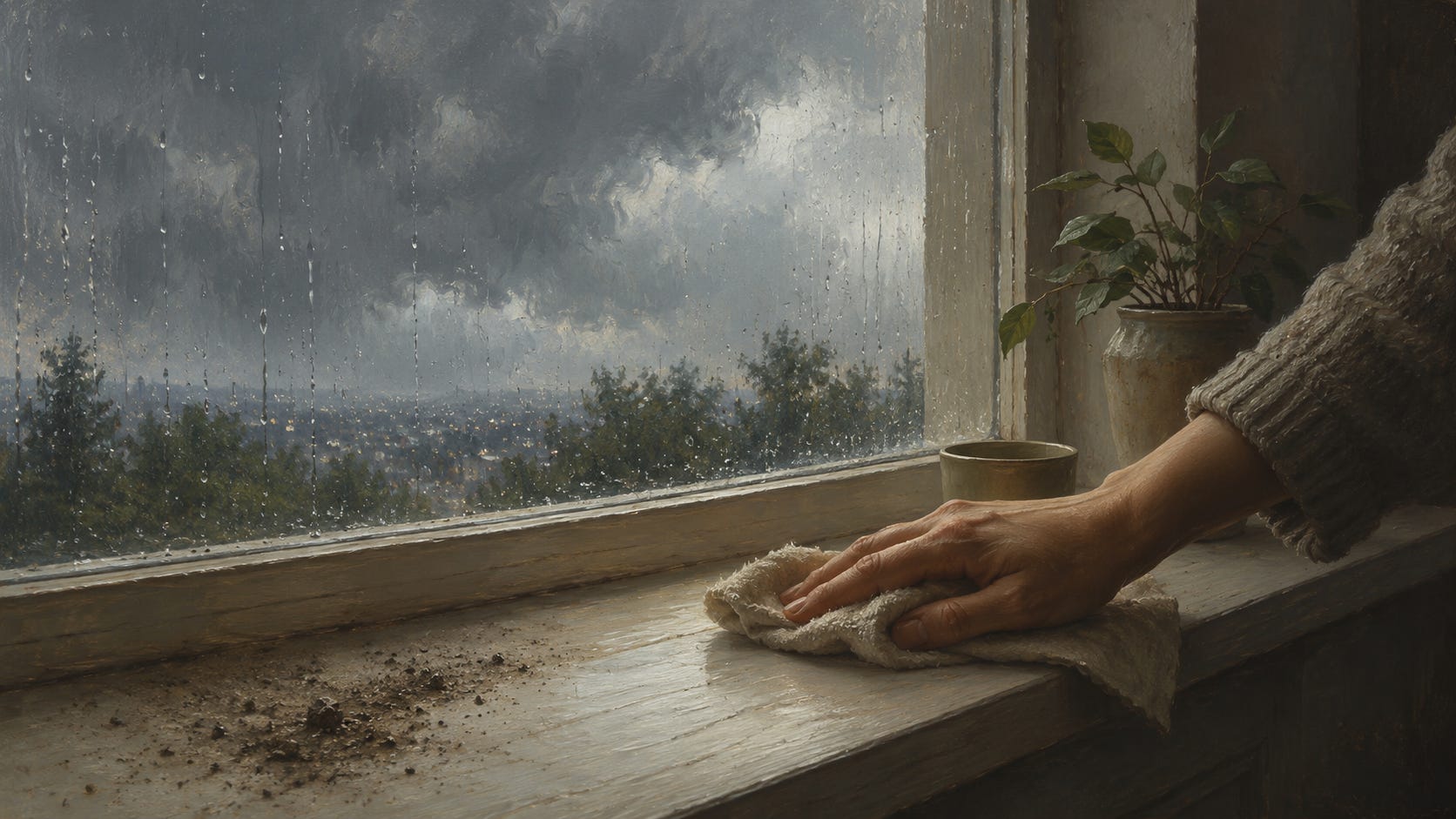
There repeated, familiar work gives my mind a place to focus on a need that isn’t complicated or emotionally wrenching.
Perhaps that’s part of the wisdom behind daily cleaning habits found in Japanese homes, schools, and traditions: the same small actions done again and again, not because life is perfectly ordered, but because the act of tending to one small area restores a little order inside us as well.
The task doesn’t erase the sadness.
It doesn’t mean the other problems no longer matter.
But for a few minutes, my mind is no longer falling through every fear at once.
My hands know what to do.
One surface becomes clear.
One corner becomes calmer.
And sometimes that small piece of order becomes a foothold.
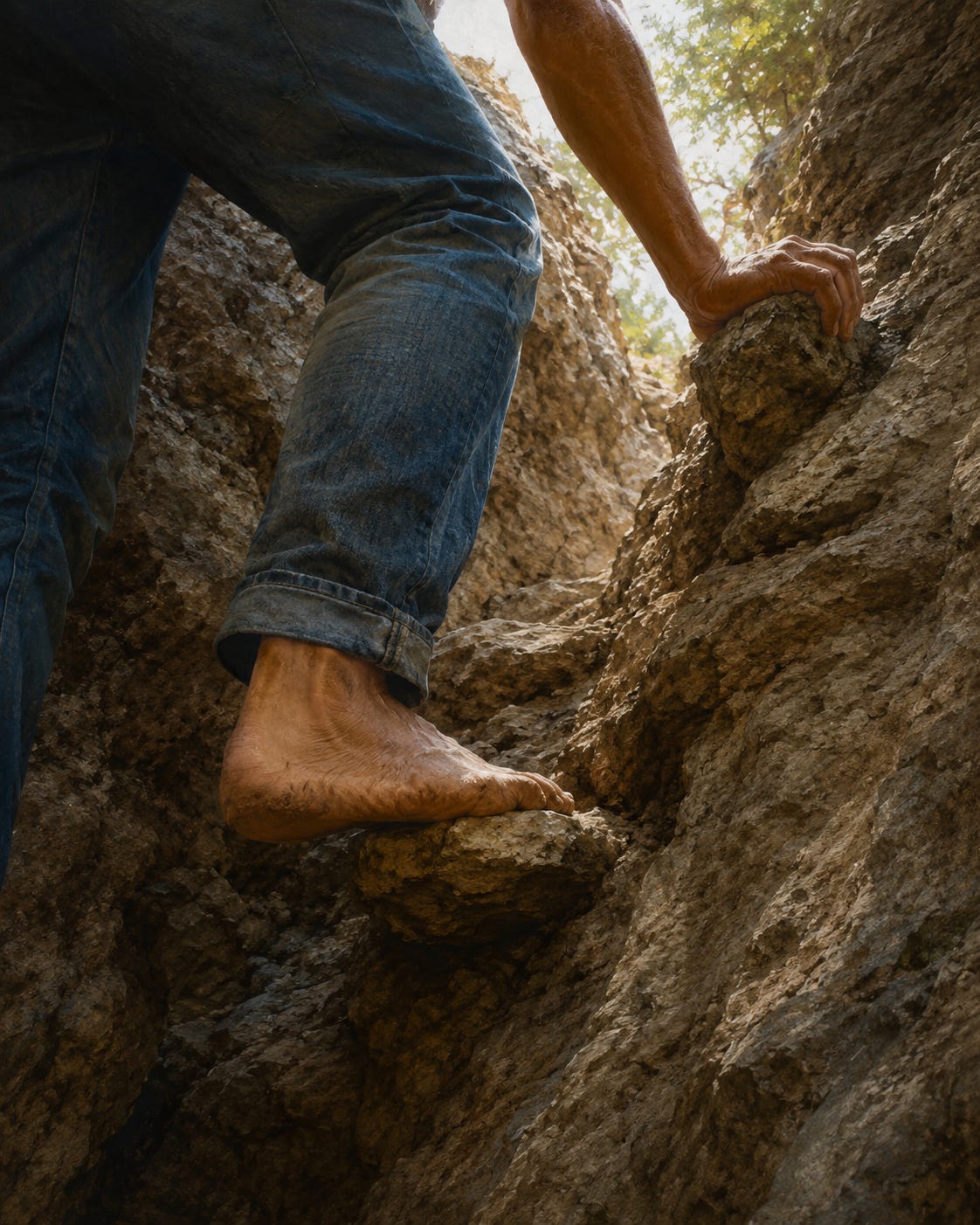
From there, I’m able to think again.
This is what I mean by higher ground.
It’s not abandoning the people we love.
It’s not becoming less concerned.
It’s not pretending the storm has passed.
Sometimes higher ground is a new way of thinking.
And sometimes it begins with a cloth, a sink, a floor, or a single room brought quietly back into order.
__JL