

A Presence of Mind—Day 58
Conversations with AI
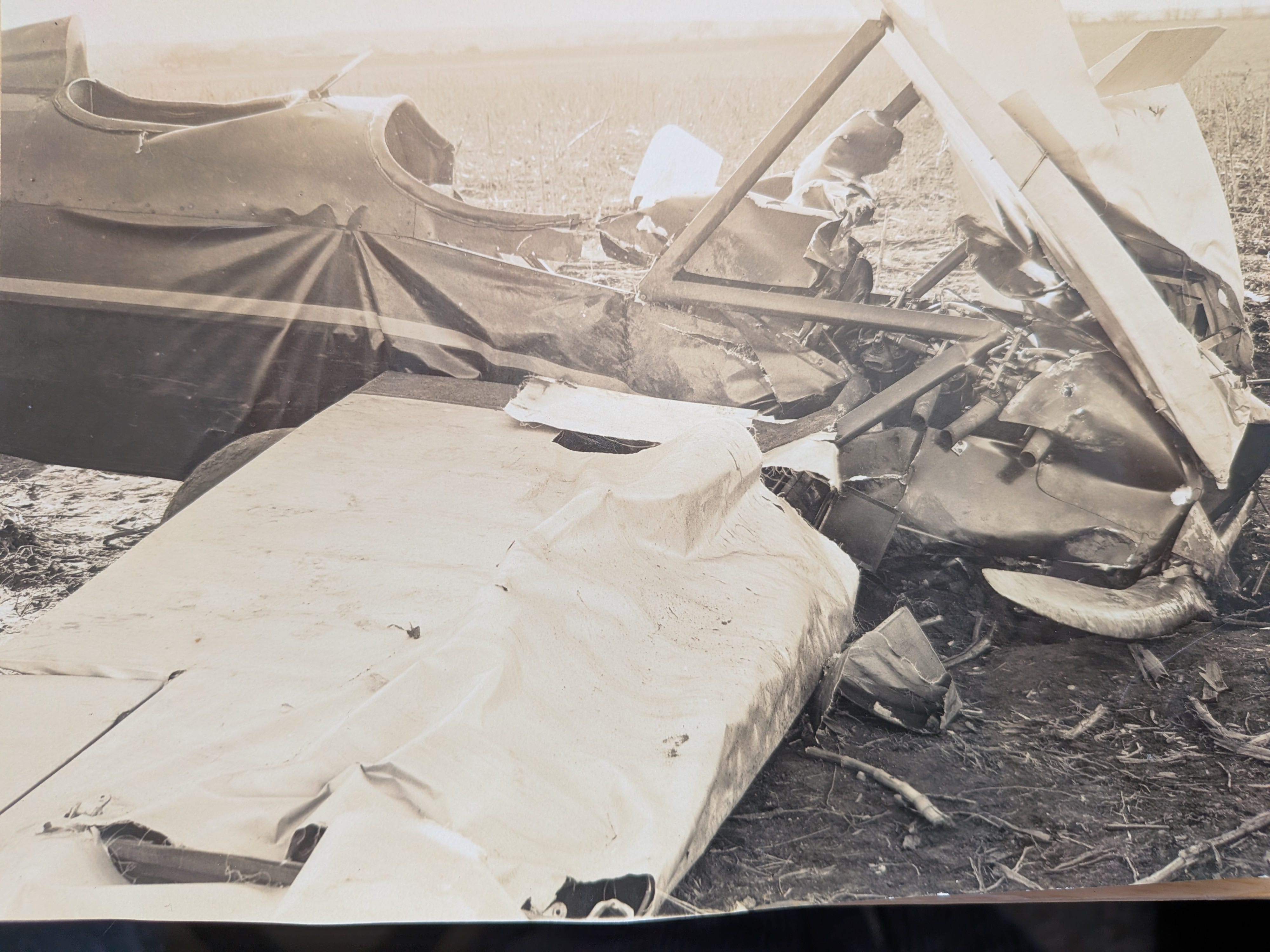
In those days, when something important broke, people tried to understand it before they replaced it.
When I look at this photograph, I see more than a damaged airplane.
I see a generation that understood how things worked because they had to repair them.
My grandfather trained pilots in Central Texas and repaired aircraft that others might have written off as lost. My father later rebuilt damaged cars the same way — taking something broken, studying how it worked, and putting it back together piece by piece.
They may not have called it “systems thinking,” but that’s exactly what it was.
If something failed, the goal wasn’t to replace it.
The goal was to understand it.
I sometimes wonder what might have been different if more of us had learned systems that way — not just with machines, but with homes, communities, and even families.
When I look at these old photographs of airplanes that crashed and were rebuilt, I’m reminded of something simple: systems fail sometimes, and the people who know how things work don’t panic—they start looking for how to repair them.
Families are a little like that too. Distance happens, misunderstandings happen, life pulls people in different directions. Sometimes we don’t know how to fix those systems right away.
Systems only survive when people understand how they work and care enough to maintain them.
What those earlier generations understood about machines is something we sometimes forget about systems in general.
Airplanes, engines, houses, and tools only keep working when someone understands how the pieces fit together.
When something fails, the goal isn’t panic or blame.
The goal is to understand the system well enough to repair it.
The same principle quietly applies to larger systems too — including the ones that hold a country together.
Democracies aren’t sustained by personalities or slogans.
They survive when ordinary people understand how the system works and care enough to maintain it.
Like any complex machine, when the maintenance stops, problems begin to appear.
If any of my children or grandchildren ever read these posts someday, I hope they understand something about where they come from. The people in these photographs believed that when something important breaks, you don’t throw it away—you try to repair it.
__JL
What you say here reminds me in some ways of Matthew B. Crawford's book "Shop Class as Soul Craft" ... https://www.penguinrandomhouse.com/books/301618/shop-class-as-soulcraft-by-matthew-b-crawford/