

Yesterday, I noticed a little purple figure stuck to the wall in my son’s house.
It looked like a tiny space alien wearing goggles. My son has placed these characters in different spots around the house, and I knew they came from a game, although I couldn’t remember which one.
The game is Among Us.
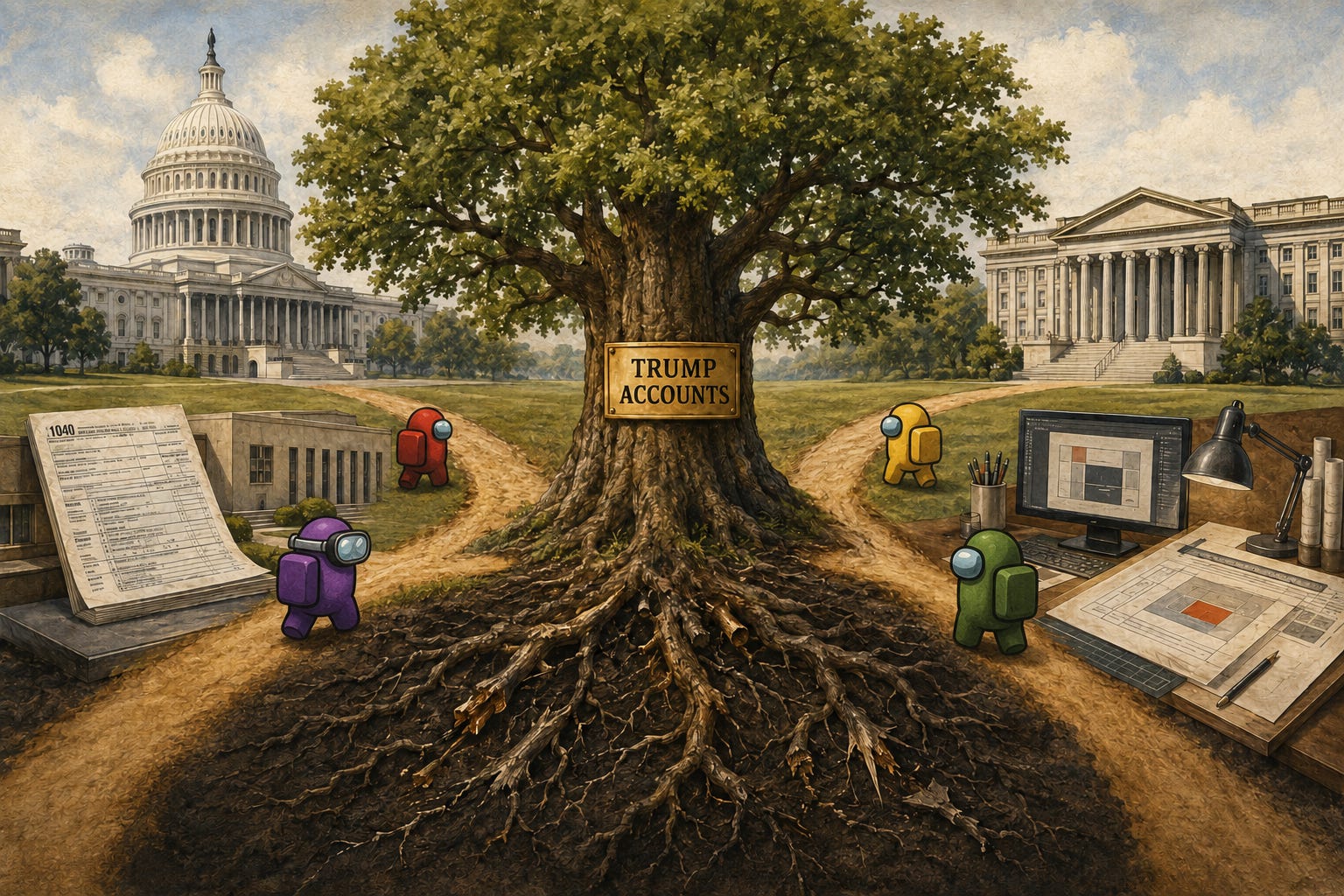
That led me somewhere unexpected: to the rules of democracy and the difference between participating in a system and learning how to exploit it.
In *Among Us*, the Impostor looks like everyone else while quietly sabotaging the ship and encouraging the Crewmates to distrust one another. A country, however, is not a game board. Its citizens are not pieces, and the damage does not disappear when the round ends.
Then I remembered my grandmother’s Jokers.
After she died, I came across a collection of Joker cards she had saved from different decks. I never asked her why. I don’t think I even knew about the collection while she was alive.
She played bridge, and bridge is played with a standard 52-card deck without the Jokers. Perhaps she removed them before playing and simply couldn’t bring herself to throw them away. Perhaps she liked their different artistic designs. Perhaps she thought the cards might be useful later for another game.
As we get older, we sometimes begin looking back along the path and noticing the objects scattered behind us. A stack of Jokers. An old instruction sheet. A tiny purple sticker on a wall.
Things that once seemed insignificant begin to look like clues.
Every game creates a miniature system. The rules determine what each player may do, what counts as fair play, what behavior is rewarded and how someone wins. Change one rule, and the same people may begin behaving very differently.
That may be what originally fascinated me about collecting instructions from games.
In Among Us, most of the players are Crewmates. They move around a spaceship completing tasks and trying to keep it operating. But one or more players are secretly Impostors.
The Impostor looks like everybody else.
He pretends to complete the same tasks while quietly sabotaging the ship. His success depends not only upon what he does, but upon his ability to create confusion about what everyone else is doing. Crewmates begin questioning one another. Innocent players may be accused and removed while the real Impostor remains among them.
The game’s creators call it a game of “teamwork and betrayal.”
That brought me back to the trail I followed in my previous posts: from an ordinary IRS page to a taxpayer-supported program bearing the sitting president’s name—“Trump Accounts.”
Congress authorized the name. The Treasury and IRS implemented the program. Designers created the presentation. Each individual step may be explained as part of an official process.
But that is precisely what makes the larger question important.
A person does not always have to stand outside a system to change its purpose. Sometimes he learns where the system is vulnerable. He discovers which customs depend upon restraint rather than written prohibition. He finds out how much can be normalized if every individual step appears official.
In my view, that is where the comparison to Donald Trump and the Among Us Impostor becomes useful.
It is not simply that I disagree with his politics. It is that he repeatedly presents public institutions, public attention and even public benefits as extensions of his personal identity. A taxpayer-funded program can begin to look like a gift bearing one man’s name rather than something created and paid for collectively by the American people.
The camouflage is not necessarily secrecy.
Sometimes the camouflage is official approval.
If Congress passed it, the agency displayed it and professional designers made it attractive, people may assume there is nothing left to question. But following a sequence of authorized steps does not automatically answer whether the result is healthy for a democracy.
The deeper question is not only, “Was this move allowed?”
It is also, “What is happening to the purpose of the system?”
Games have rulebooks. Democracies have constitutions, laws, traditions, ethical boundaries and expectations of public service. Yet both depend upon people understanding the difference between participating in a system and exploiting it.
A country, however, is not a game board. Its citizens are not pieces, and damage does not disappear when the round ends.
Perhaps that is also why I have been thinking more carefully about the children in front of me.
When a child is disruptive at school, adults naturally look for the rule that was broken or the label that might explain the behavior. ADHD may be real, but a diagnosis—or the possibility of one—does not explain every moment of a child’s life. There is no single test for ADHD, and anxiety, sleep difficulties, learning problems and traumatic stress can sometimes resemble or intensify attention and behavior difficulties.
How many children are also carrying custody disputes, conflict between parents, economic pressure, abrupt changes, fear or instability into the classroom?
The humane question is not, “Which label wins?”
It is, “What is this child carrying?”
I have taken some time away from work so I can be available if my grandson has difficulty at school and needs someone to get him. In the past, interruptions often frustrated me. I would try to capture a portion of the morning for myself and resent being pulled away from whatever I had planned.
Now his mother is handling the school mornings. She gets the children dressed and out the door. This morning, they even made their beds. Yesterday she cleaned out her car, and the timing turned out to be perfect: when she drove the children to the bus stop, their friends wanted to climb inside.
These are small things.
But perhaps small things are where a functioning system becomes visible. Someone takes responsibility for one part, giving someone else room to carry another. Life does not become perfectly orderly, but the roles begin to fit together differently.
Not every interruption is sabotage. Sometimes it is information. Sometimes it tells us that a person—or an entire family—needs more support.
The older I become, the more valuable it feels to stop and examine what I once passed without noticing: my grandmother’s Jokers, the instructions from an old game, a sticker placed on a wall, a child’s difficult day or a president’s name attached to a public benefit.
Each one asks us to look again.
Who wrote the rules?
Who is keeping the ship running?
Who benefits when the rules are bent?
And what are we failing to see because we are rushing to get through the day?
Perhaps a presence of mind begins there—not with immediately knowing the answer, but with recognizing the small object in our path and pausing long enough to ask why it matters.
This reflection continues the trail begun in:
Follow the Branding Trail — Presence of Mind Day 71
Sources and further reading
__JL