

A Presence of Mind—Day 67
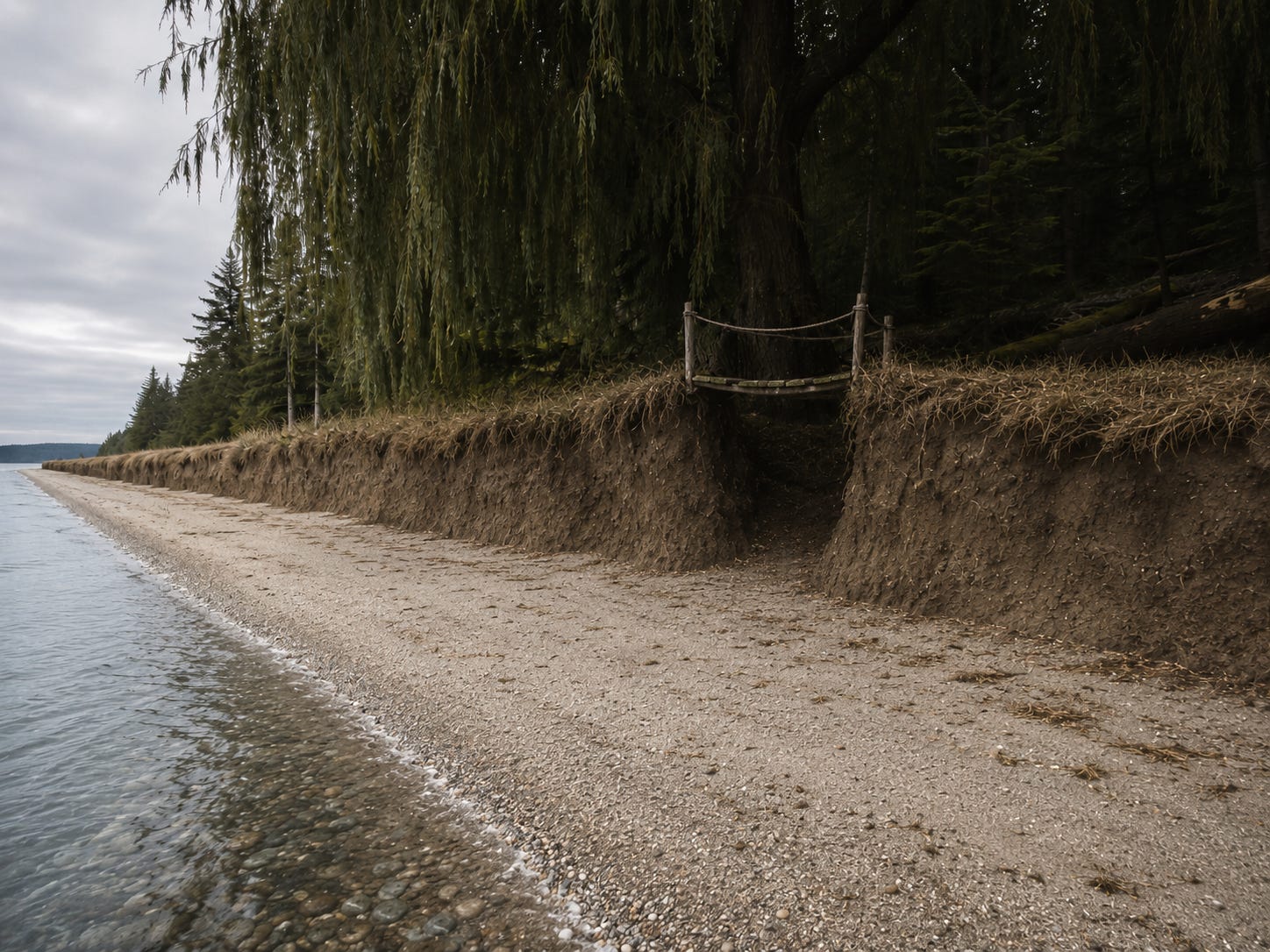
This image was AI-generated from a place described by one of my daughters, after she was prompted to imagine any scene along a path and here she gave particular details.
It feels more like a glimpse into the words she chose — words that may be pieces of her own complex personal puzzle.
She has often believed that her artwork, her delicately precise sculptures, her beautifully penned writings, and her ability to capture the feeling of small living moments led her nowhere.
The feeling of holding a little lizard in her hands.
The thrill of chasing after an elusive armadillo.
The patience of noticing something small enough that most people would walk right past it.
All of these adventures — poured onto paper, shaped into sculptures, written into careful lines — may have seemed, to her, like scattered pieces that never became a road or a bridge to anywhere beyond her small space.
I think they were always evidence of a mind that could see what others missed.
A mind that noticed texture, movement, feeling, and life.
A mind that was excited and unafraid and saw adventure waiting on every hike every new place we went. Somewhere her joy was cut away and the little girl who found so much of wonder to write about, to draw about, to dream about every day, she slipped into a little crevice and has been in that alone place for a very long time.
In this image of a bridge from her description …
It crosses a small cutaway in the dirt wall, but it does not seem to lead anyone into a better place. It is fragile, almost unnecessary, like a gesture toward connection without the strength to truly carry someone across. And that may be the point.
Some bridges are not real support.
Some “help” looks like help but does not truly orient or support. I was not helpful as a parent . I was not taught the consistent skills necessary to navigate this world and I passed that unpracticed skill to my daughters.
A child should not be expected to navigate a school, a family, a road, a store, a hospital, or a court system completely alone.
Someone points.
Someone explains.
Someone translates.
Someone says, “This is where you go. This is what that means. This is what comes next.”
But somewhere along the way, once a person becomes an adult, the world often stops translating. The child, now grown up continues to navigate by instinct, some skill, some luck, mostly without a map . The world keeps turning whether you need it to slow down or not. It keeps turning and turning and we’re trying to just keep up.
It assumes orientation has already happened.
It assumes the person knows how to stand, how to ask, how to apply, how to explain, how to recover, how to belong.And if that person was never properly oriented in childhood — or was interrupted by trauma, shame, fear, poverty, neglect, or isolation — then adulthood does not feel like freedom.
It feels like being dropped into another system with no map.
Some people are not refusing adulthood. They are stranded between systems.
They did not get to fully be children and know the safe guidance into adulthood.
And now the adult world looks at them and says, “You should know this by now.”
But knowing is not automatic.
Orientation is not automatic.
Confidence is not automatic.
Belonging is not automatic.
These things are built.
The system speaks its own language, keeps its own rhythm, follows rules ordinary people do not understand, then punishes them for not knowing how to move inside it.
And the mental-health system often works the same way.
It tells people to get help, then hides the help behind money, insurance, paperwork, waiting lists, stigma, transportation, and exhaustion.
Systems assume people are already oriented.
But many people are not oriented.
And the systems that should orient them often shame them instead.
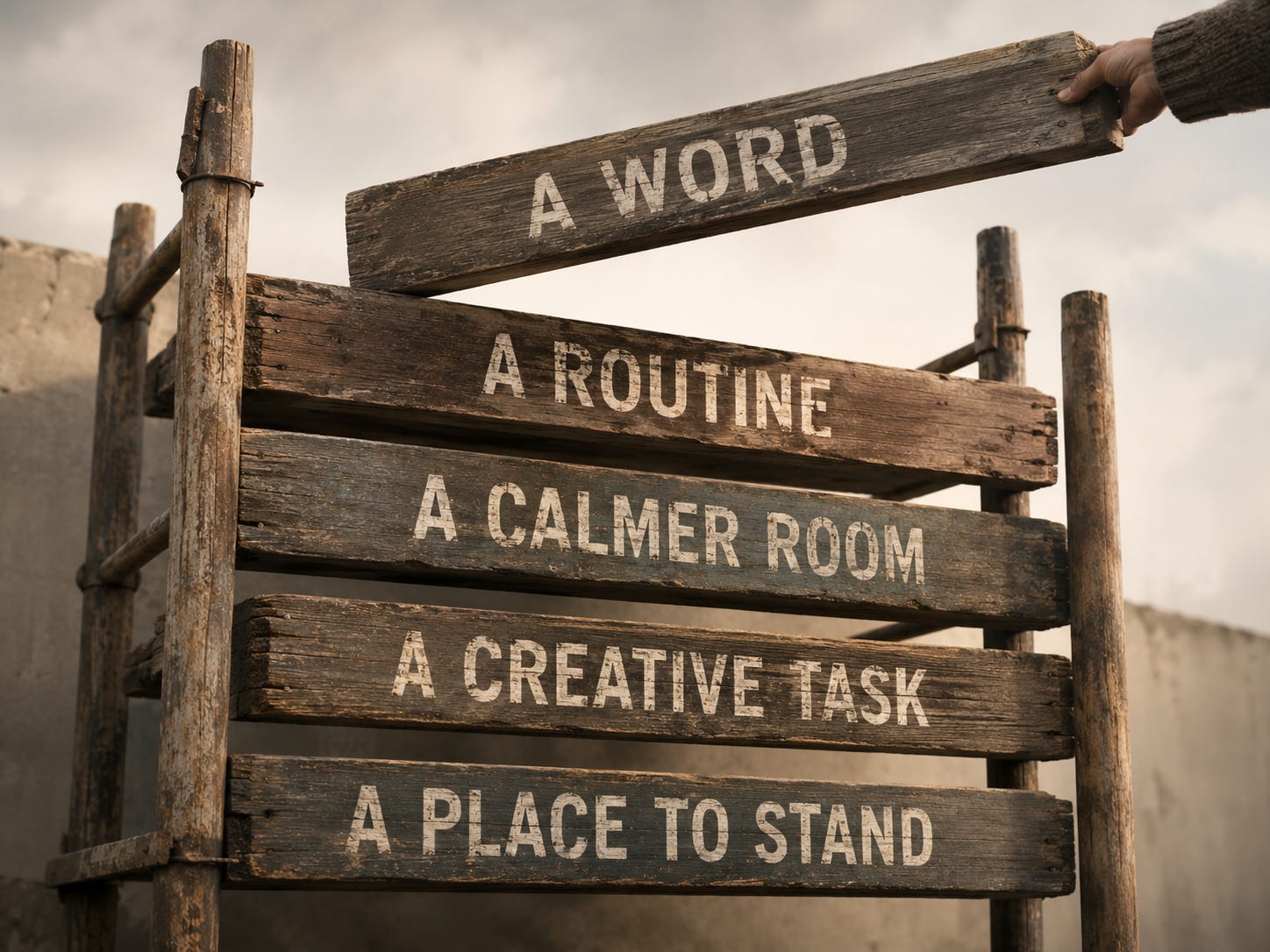
I am beginning to see these posts as boards in a bridge.
Not a finished house.
Not a perfect answer.
But something to stand on while trying to repair what has been left unsupported.
Continuity helps a person understand that life is not just random events.
One day connects to the next.
One experience teaches the next.
One small pattern becomes a path.
Children need translation.
Once someone is grown, the world assumes they should already know.
There are people caught between the childhood system they never fully got to inhabit and the adult system they were never safely taught to enter.
So maybe we stop waiting for the whole system to become humane before we begin.
A bridge is not the same as rescue.
The bridge in the image may not lead anywhere useful.
So we build differently.
A word.
A routine.
A calmer room.
A repeated explanation.
A creative task.
A place to stand.
One board at a time.
__JL
Related Threads
Day 63: The First System We Never Explain
Children are dropped into systems — school, time, rules, expectations — before anyone fully explains the system itself. This post begins the thread that Day 67 extends into adulthood.
Day 64: From Following to Understanding
This piece looks at the difference between simply following directions and actually understanding the system you are inside. A scaffold is not built for blind compliance; it is built so a person has enough support to begin understanding what comes next.
Day 65: Continuity
Continuity explored how understanding is built through connected experiences. One day, one question, one observation, and one routine begin to form a path instead of scattered fragments.
Day 66: The Translation Layer
The Translation Layer asked why children are rarely expected to navigate systems alone. Someone explains, points, repeats, translates, and gives them a way to understand the room before they are expected to move through it.
Day 59: Words Move Minds
Words can become part of the scaffold too. Sometimes naming the invisible thing is the first board strong enough to stand on.