

A Presence of Mind—Day 57
Conversations with AI
After writing about the custody situation in the last post, something kept sitting in the back of my mind.
When adults look at a conflict like that, we see courts, judges, hearings, legal procedures, and rules that shape what can happen next.
But children don’t see any of that.
They only see what is right in front of them.
They see the adults they love.
They see confusion.
They see separation.
And they wonder why things are happening the way they are.
To a child, the system behind the situation is invisible.
That realization made me think about something bigger.
Children spend their entire early life surrounded by systems they don’t yet understand.
The legal system.
The school system.
The grocery store.
The way food arrives in the house.
The way parents leave for work each morning.
Even the way a city works or how rules exist at all.
To a child, these things can feel random.
But they aren’t random.
They are systems.
And the truth is, most adults were never really taught to see those systems either.
We simply learned to move through them.
Which raises an interesting question:
What if we started teaching children to notice systems much earlier?
Not through lectures or civics textbooks.
But through the ordinary things they already experience every day.
Going to the grocery store.
Planting something in the garden.
Watching how a house is maintained.
Seeing how tools are used and cared for.
These small, everyday moments are actually the first place system thinking begins.
Children don’t need to understand government yet.
But they can begin to understand something simpler and more powerful:
Things work because someone understands how the system works.
Looking back, that is something I wish I had understood earlier when my own children were young.
Not in the form of lectures.
Not as rules written on a wall.
Just helping them notice how things actually work.
I wish someone had done that for me too.
When I think about the people who came closest to teaching it, it wasn’t through formal lessons. It was through the older people in my family — grandparents and relatives who had grown up in a different time.
They knew how to care for things.
Tools were cleaned and put back in their place.
Broken things were repaired instead of thrown away.
Objects were kept long enough that they were sometimes passed down from one generation to the next.
Without realizing it, they were teaching something important.
They were showing us how systems are maintained.
Today, children often spend less time around those older generations. And many of us, myself included, grew up without fully learning those habits in a way we could pass along clearly.
When I look around my own house now, I can see the result of that gap.
A house itself is a system.
But when there are unfinished repairs, tools scattered in different places, or parts of projects sitting around waiting to be finished, the system starts to feel chaotic instead of working smoothly.
I recognize that feeling in my own life sometimes — moving from one task to another, trying to fix one thing here and another thing there.
Looking back, I can see that if someone had shown me earlier how to think in terms of systems — how spaces, tools, maintenance, and routines all connect — things might have felt very different.
But there is a hopeful side to that realization.
Because it means it’s never too late to start showing the next generation how systems actually work.
Things work because someone understands how the system works.
When I think about where I first saw that kind of understanding, my mind goes back to my grandparents and my father.
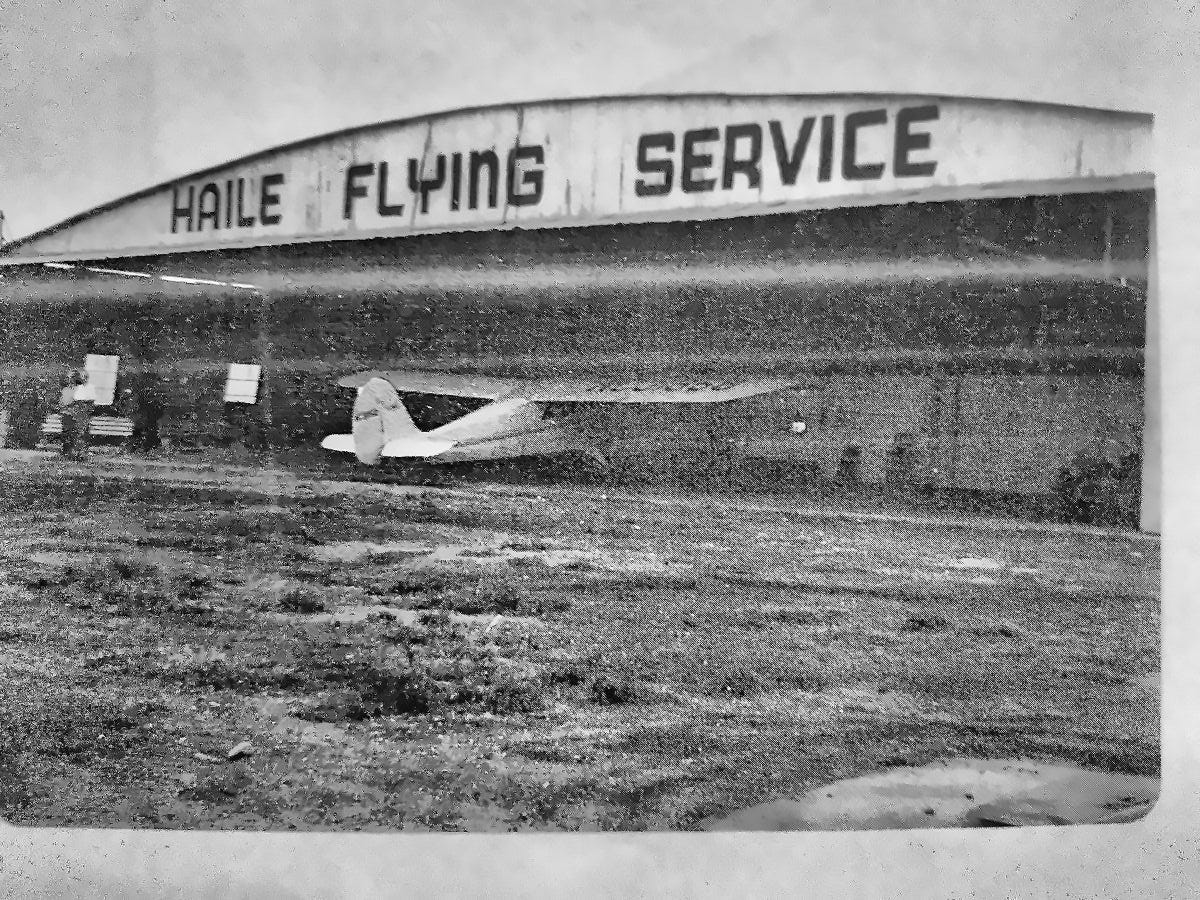
My grandfather ran a small airport in Austin, Texas called Haile Airport where he trained pilots and rebuilt damaged aircraft.
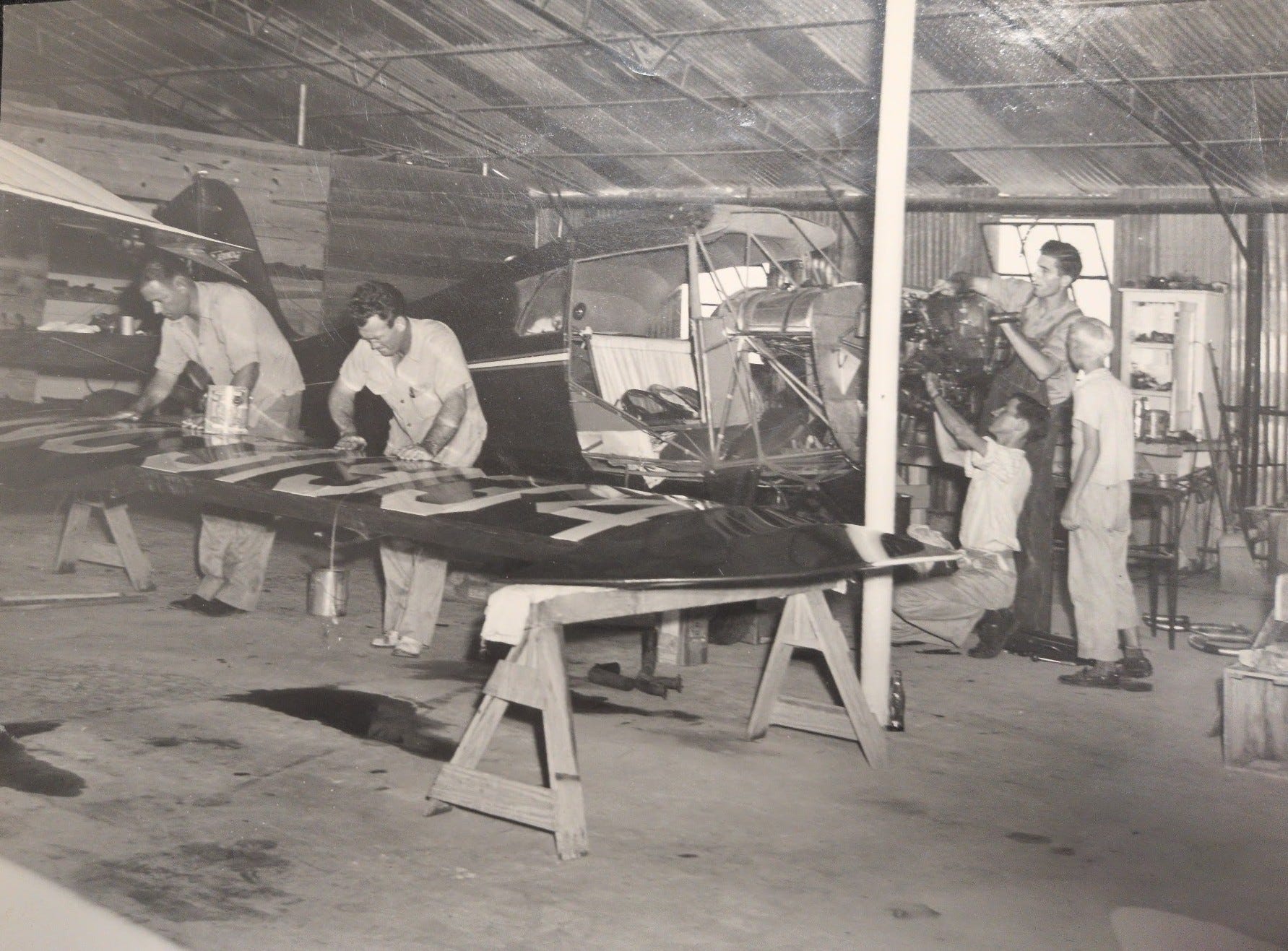
My grandfather, “Doc” to folks who knew him, is second from left in the above photo
Granddad treated his tools with respect. Everything had a place. Nothing rusted. Nothing was left scattered around.
My grandparents didn’t keep things because they couldn’t let go of them.
They kept things because they knew how to care for them.
There’s an important difference between those two ideas.
Earlier generations often saved objects because they understood how those objects fit into a working system. Glass jars stored nails and bolts. Tools were cleaned and oiled so they wouldn’t rust. Things were repaired, reused, and sometimes passed down.
Today we often see something different.
Homes filling with objects that no longer serve a purpose. Containers designed so they can’t easily be reused. Products made to be replaced instead of repaired.
What once was stewardship can start to look like clutter when the knowledge of how to maintain a system disappears.
When the knowledge of how things work fades, objects stop being tools and start becoming clutter.
Understanding that difference is part of learning how systems actually work.
My father did something similar with cars. He would buy wrecked cars at a discount and rebuild them. He served in the Airforce and developed the same sense of respect for place and tools . His garage was meticulously clean and organized no matter the project.
My first car came from one of those projects — a black 1965 Pontiac Bonneville with a red interior. It was long and loud and a little bit wild. The kind of car that made other drivers pull up next to you at a stoplight just to see what it could do.
But what stayed with me wasn’t the car itself.
It was the idea that something broken could be understood, repaired, and brought back to life.
Without realizing it, the older people in my family were teaching something important.
They were showing how systems are cared for.
Today many children spend less time around older generations who worked that way. And many of us — myself included — grew up without fully learning how to pass those habits on.
Looking back now, I wish I had spent more time helping my children simply notice how things work.
Not politics.
Not complicated ideas.
Just the systems we interact with every day.
A grocery store.
A garden.
A house.
Tools.
A car.
Over the next few posts, I want to look at some of those ordinary systems — the kinds of things children see every day — and explore how they can quietly teach the foundations of system thinking.
__JL