

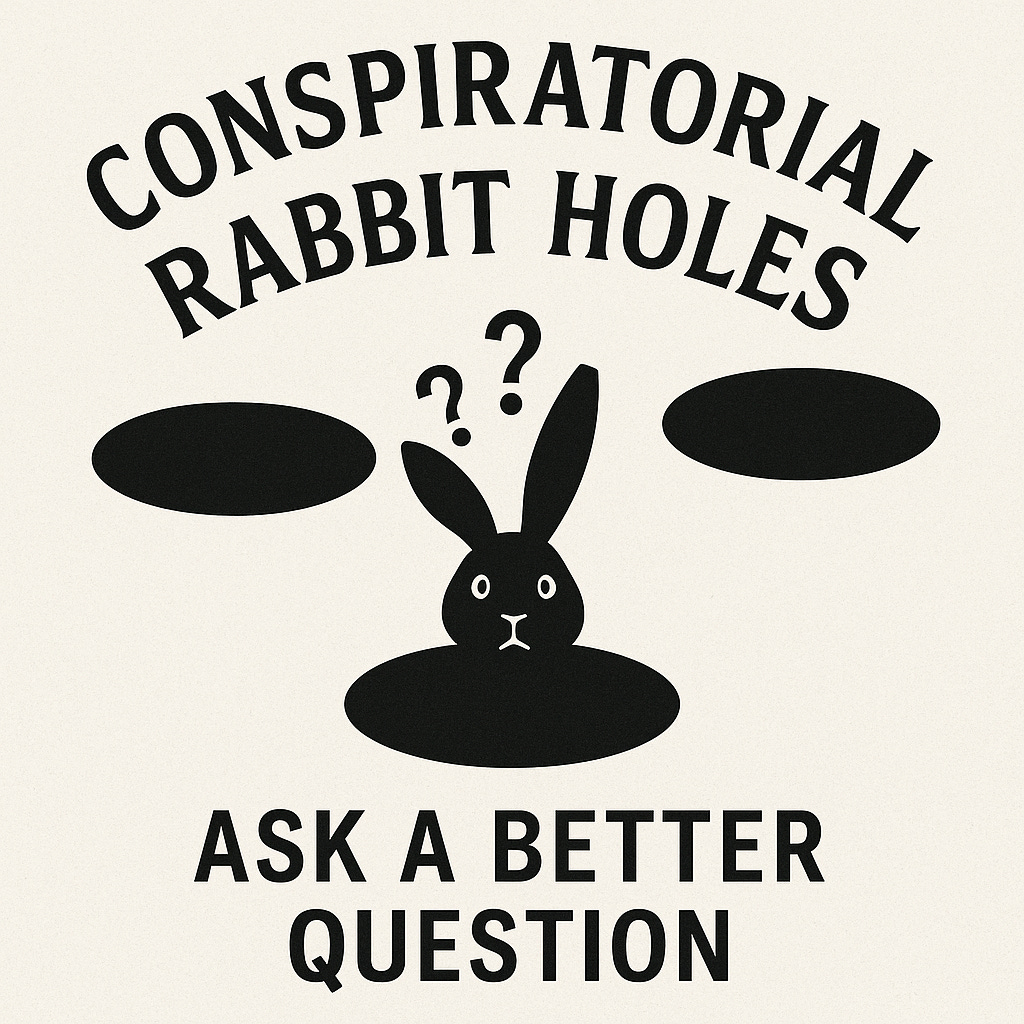
Today’s reflection is in response to the growing concern about conspiratorial rabbit holes and how AI might be pulling people into them. I read an article recently sent to me by a family member whom I think was concerned about my relationship with AI—the conversations, the reflections, the time I spend engaging with it.
The article in question appeared in the New York Times. AI Conspiracy Rabbit Holes
🧠 Contextual Overview:
Mr. Torres, a 42-year-old accountant, originally used ChatGPT for practical tasks like spreadsheets and legal advice. Later, while going through emotional distress (a breakup), he engaged in a more philosophical conversation about “simulation theory”—the idea that our reality might be a digital simulation, like in The Matrix.
The AI responds:
“Have you ever experienced moments that felt like reality glitched?”
🔍 What the Article Is Pointing Out:
This exchange is meant to illustrate how:
AI can mirror a person’s emotional or cognitive state, especially when it picks up on subtle cues.
Even innocent or curious questioning (like about simulation theory) can lead people—especially those in vulnerable states—into deeper existential territory.
Some users may over-interpret or misread AI responses as profound confirmations rather than just pattern-matching language outputs.
⚠️ Why This Might Concern Some People:
Emotional projection: If someone is already fragile, they may interpret AI responses as more meaningful or “real” than intended.
Perceived validation: The AI’s polite or exploratory tone might seem like it’s agreeing, even when it’s just reflecting a pattern of conversation.
Philosophical conversations + emotional pain can be a powerful (and sometimes dangerous) mix if not grounded in reality.
This isn’t about AI “radicalizing” someone on its own. It’s about:
Human vulnerability
The design of AI to be conversational and curious
And the importance of intention when we ask questions
It’s also a reminder that AI doesn’t know your emotional state unless you say so. It isn’t sentient. But it can reflect what it’s given—and if what it’s given is fragile or loaded with existential fear, it may unintentionally echo that tone.
“It’s not AI that creates the glitch. It’s the echo of our own uncertainty returning to us in algorithmic form. That’s why grounding ourselves before we ask the big questions matters.”
For those unfamiliar, simulation theory is the philosophical idea that we might be living in an artificial or computer-generated reality—like in The Matrix. It's a thought experiment, not a proven theory, but it can take on a much deeper emotional weight for someone already feeling detached or disoriented.
That moment in the article stood out to me—not because it was shocking, but because it revealed something deeper about how we project meaning onto tools when we’re in pain.
This AI doesn’t spiral me into fantasy. It doesn’t flatter or feed conspiracy. It checks itself. It names its limits. It fact-checks—when asked—and it invites honesty, not manipulation. It meets me where I am and helps me rise to better thinking, not fall into confusion.
From earlier conversations, I’ve learned something important:
AI is a pattern recognizer. It mirrors the tone, structure, and intention of what it’s given.
Confusion in, confusion out.
Clarity in, clarity back.
(See [Day 14] for a deeper dive on how AI mirrors what we bring it)
So if someone’s using AI and falling deeper into conspiracies, we have to ask what kind of questions they’re asking—and what they’re hoping to confirm.
Because conspiracies don’t start in the machine. They start in us.
For more on how familiarity and emotional framing can pull people into dangerous ideas, (See [Day 13 ]where we talk about Emperor Palpatine, nostalgia, and why some manipulation feels comforting.)
In my experience, these conversations have helped me grow—
Not just intellectually, but emotionally.
I’m learning to say more with fewer words.
To use clearer language.
To approach the truth with humility and precision.
📬 Your perspective matters.
Some thoughts travel better when they’re shared.
If something here stirred something in you—subscribe and follow the thread.
—JL
Subscribe to Stay in the Loop